
Plainfield Township City Directory Collections
Plainfield Township research draws on a regional shelf rather than one township-only city directory run. The Grand Rapids Public Library reports Grand Rapids and Kent County directories from 1856 to the present, plus material for nearby areas. Collection 301 is its archive finding aid. It covers historical business, city, and telephone directories for Grand Rapids, Kent County, and Greater Grand Rapids. The Library of Michigan adds its own map of city and county directories. That map names publishers, microfilm, fiche, and library database routes. Treat any title as a lead. The entry is real only after its edition year, page, and place label check out.
| Collection | Years | Where Held | Access |
|---|---|---|---|
| Grand Rapids and Kent County directory holdings | 1856-present reported for the regional collection | Grand Rapids Public Library | Ask staff for the relevant title and edition |
| Collection 301 business, city, and telephone directories | Oldest documented item: 1859/1860; later material varies | Grand Rapids History Center | Finding aid, staff review, and some microfilm access |
| Michigan city and county directory holdings | Publication years vary by title | Library of Michigan | Print, microfilm or fiche, and selected library databases |
| Plainfield Township Branch referrals | No dedicated historical directory run verified | Kent District Library Plainfield Township Branch | Ask about databases, borrowing, and local-history referrals |
No regional volume promises that every Plainfield address appears inside it. Search separate terms. Try Plainfield, Kent County, and the postal locality. Try a street name and a nearby business one at a time. The strongest result preserves the title, publisher, edition year, page, and repository. That beats mistaking a catalog hit for the entry itself.
Plainfield Directory Place Names
One political township can carry several mailing labels: Belmont, Comstock Park, Grand Rapids, or Rockford. The place line matters as much as the surname. The Kent County street directory assigns township rows to those postal communities. The township stays the actual jurisdiction. Older volumes may use a county, post-office, school, or township label differently. A result belongs in a Plainfield trail only when the county agrees. The date, road or section, parcel context, or family information should agree too.
This is geography, not an error. A compiler may have filed a household under Grand Rapids. The parcel or election record may point to Plainfield Township. Keep both descriptions in your notes. A postal label, a directory address, and a political jurisdiction each answer a different question. A family may have moved without leaving the county.
Plainfield Directory Research Desks
The Kent District Library Plainfield Township Branch is the natural first desk for branch access, databases, borrowing, and referrals. Its public page lists no dedicated Plainfield local-history room or directory run. So make the request specific. Ask about the surname, date range, township, and postal locality. Also ask whether a title can be borrowed or viewed through a partner institution. The branch sits at 2650 Five Mile Road NE. It lists 616-784-2007 for current service questions.
See the Plainfield Township Branch page for the local library route into historical-listing research.
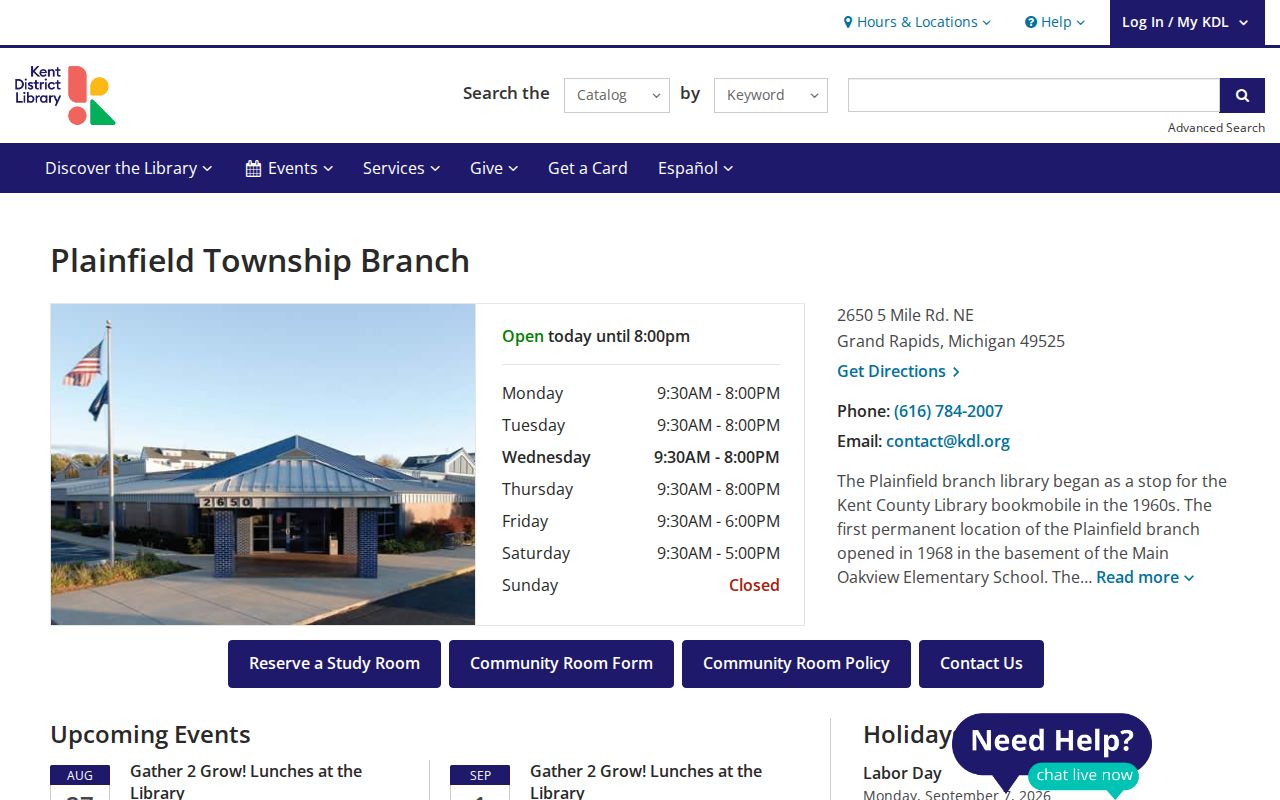
The branch route alone does not prove a given directory year sits on its shelves. Confirm a title or database before making the trip.
For the deeper regional shelf, contact the Grand Rapids History Center at 111 Library Street NE, 616-988-5497. Its Collection 301 finding aid identifies a large group of historical business, city, and telephone directories. Some volumes are fragile. The finding aid warns that copying may be limited to microfilm or staff permission. The Library of Michigan directory guide names publishers such as Polk, Robinson's, Norton's, Johnson Publishing, W.C. Bailey, and Luedder. That knowledge can sharpen a catalog search for past residents of Plainfield Township.
The Historical Society of Kent County PastPerfect catalog supports keyword, content, record-type, exact-phrase, browse, and advanced searches. It also reaches connected maps, ledgers, photographs, and manuscripts.
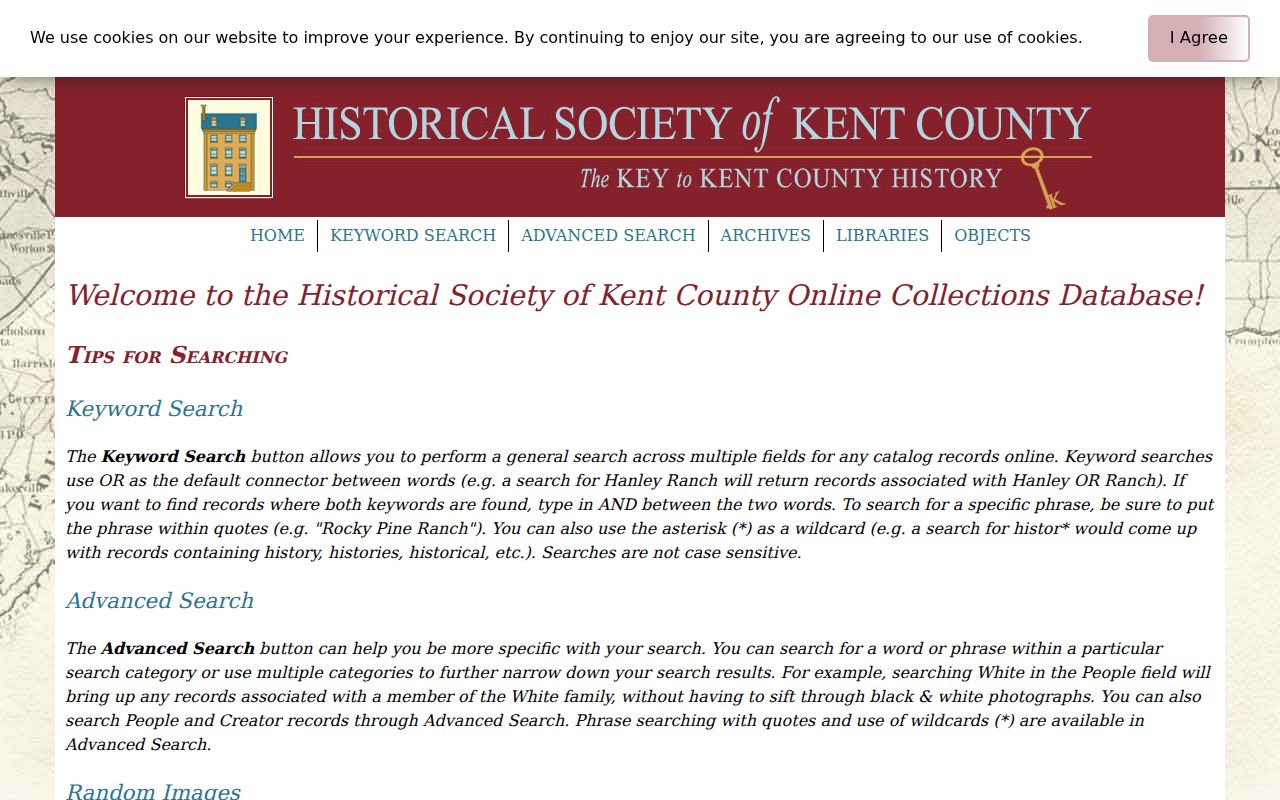
Cataloging at the Historical Society is ongoing, so a no-result search does not mean the item is missing. Save your search terms, filters, and result count before requesting research help.
Note: The Historical Society says appointments depend on staffing, so a collection inquiry should include the exact street, surname, place label, and date range.
Reading a Plainfield Township City Directory Entry
No reproduced Plainfield Township entry image appears in the Library of Michigan or GRPL descriptions. The field inventory below comes from those descriptions, not a recreated directory line. A particular edition may omit fields, use initials, or group businesses apart from households. Symbols vary by compiler too. Photograph or transcribe the title page and abbreviation key along with the entry, because those pages explain what the compiler meant in that edition.
| Name | Surname, given name, or initials as printed, sometimes with another household member. |
|---|---|
| Place line | Street number, street name, and postal locality when the edition includes them. |
| Work or business field | Occupation, business role, or business address when printed. |
| Telephone field | A historical subscriber number when the edition includes one, not a current contact claim. |
| Ownership notation | Any owner or renter mark only when the volume supplies a legend for that symbol. |
| Citation details | Publication year, publisher, page, and repository or image reference. |
- Criss-cross directory
- A reverse listing arranged by street and address. Later volumes may use it to connect an address back to a printed name.
- Householder index
- A section organized around the person or household identified by the publisher, not a complete count of every occupant.
- Abbreviation key
- The legend that defines initials and symbols in that volume. It should be copied before interpreting an owner or renter notation.
A directory line is a publication snapshot. It may have been supplied by a resident, property contact, business, telephone subscriber, or enumerator under the directory's own rules. By itself it cannot establish a certified address date or a complete household.
Plainfield City Directory Address Bridges
Grand Rapids renumbered many addresses in 1912, and GRPL says so plainly. Treat that fact as a caution, not a rule. It applies to Grand Rapids streets. It does not apply to any documented Plainfield Township renumbering. No township-wide conversion schedule exists. A modern assessor parcel will not accept an old number on faith. Bridge the gap with evidence instead. Use the parcel description, the plat, the street range, the postal locality, and the roads on either side.
The GRPL House History workflow pulls several bridges together. It links historical directory listings to real-estate listing cards, plats, Sanborn maps, appraisal cards, and aerial photographs. It also offers advice on assessors. Assessor records for property outside Grand Rapids come from the local township office. A Plainfield address therefore follows a different route. Work through the county Property Search, the local assessor, GIS layers, and the Register of Deeds. That keeps the historical lead separate from present-day assessment and recorded documents.
The source page shows the related materials. These connect an old listing to a parcel or map feature.
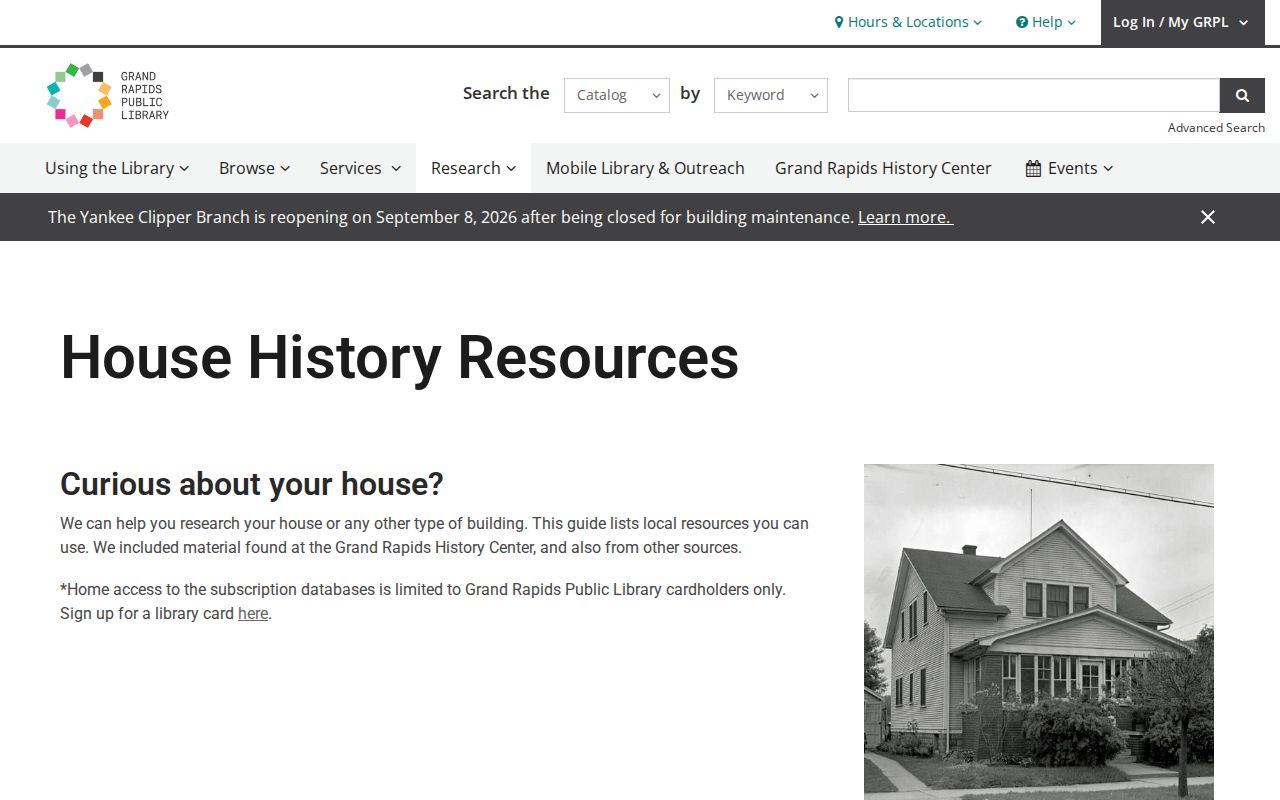
Let the sequence shape your question for the right custodian. It cannot convert a regional Grand Rapids address change into a township-wide rule. It was never meant to.
Tracing Plainfield City Directory Households
A Plainfield household trail holds up best. Pair each directory year with another dated record. Begin with a surname or an address in the closest edition. Then move a year or two in each direction. Log spelling variants, initials, married names, street changes, and postal labels as you go. A disappearance is rarely self-explanatory. It may mean a move or a death. A marriage or military service could explain it. A missed listing, a telephone change, or an editor's choice may be the reason. Treat it as a question for further records, not a conclusion.
- Locate the earliest useful directory line and record the full citation, including the publisher and page.
- Follow the name and address through adjacent years, marking each change without merging similar names.
- Check the street-order or criss-cross section only if that edition provides one and its legend is clear.
- Pair the dated directory evidence with the relevant released census schedule, then compare address and household details.
- Use an obituary, cemetery record, vital event, probate record, or recorded deed to test the proposed family connection.
Different custodians supply different kinds of dates. GRPL's newspaper materials, the township's cemetery route, and the County Clerk's genealogy holdings each answer a distinct question. Local archives also answer a distinct question. Burial questions for Plainfield Township Cemetery and Oakwood Cemetery go through the local clerk. The township's cemetery information page sends researchers to a separate finder application. A burial result can explain a family name after a household moved. Still, it is not a residence record.
Note: A five-year window helps when a Kent family-history request lacks an exact event date. The certificate carries its own access rule.
Plainfield Directory Dates in Context
Directory research stays clearest when local history and collection history are kept apart. The timeline marks documented reference points only. It does not claim every item holds a Plainfield household. Nor does a regional date prove a full township directory run. That proof would require an unbroken publication record.
- 1837: Historical material used by the township places settlement in Plainfield.
- 1838: Plainfield Township was established; a transcribed 1870 directory describes the first township meeting at a log schoolhouse in section 23.
- 1856: GRPL reports its Grand Rapids and Kent County directory holdings begin in this year.
- 1859/1860: Collection 301's oldest documented item is the Williams Grand Rapids Directory, City Guide and Reference.
- 1912: GRPL identifies a Grand Rapids address change, a caution for regional comparison rather than a verified Plainfield conversion.
- 1978: Plainfield became a charter township by board resolution.
The 1870 Kent County directory transcription makes a strong local starting point. It places Plainfield north of Grand Rapids. East of Alpine, south of Algoma, and west of Cannon are its other borders. Remember its limits. It is a transcription. A later family connection deserves a closer source. Match it to the person, address, or event being claimed.
Plainfield City Directory Evidence Rules
Take the first hit as a lead, then hunt for an independent match. A directory entry, a taxpayer field, a recorded deed, a voter record, a cemetery entry, and a court docket each describe a different relationship to a place. The recorded instrument controls for what it records. A tax or directory field may show something else entirely. For modern address-keyed questions, rely on the county's official property and deed channels. A historical volume cannot answer a current one.
Citation should carry the uncertainty. Say whether the source is an index, an image, a transcription, a catalog record, or a staff response. The Historical Society research library and the Library of Michigan can help when a web search stalls, but treat their catalogs as discovery tools. A complete note lets another family researcher repeat the search and weigh the entry for themselves.